Colchester · North Essex
Hedges that have crept up year after year, conifers blocking the light and corners of the garden lost to brambles and self-seeded saplings. Hedges are cut and reshaped, overgrown ground is cleared, and the waste is chipped on site rather than left for you to deal with.
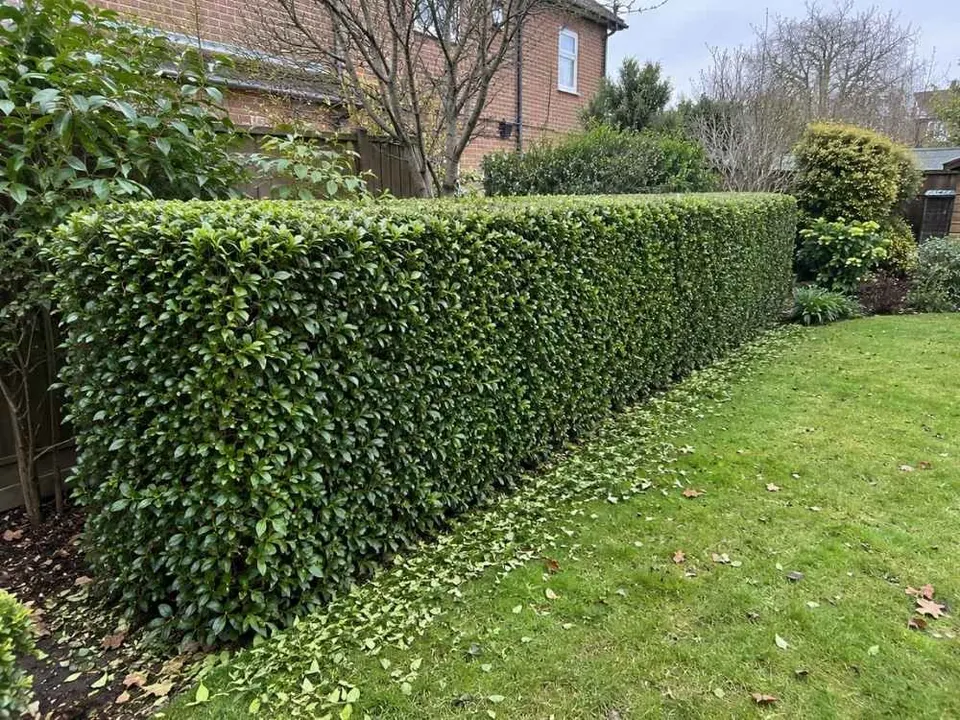
Hedges and clearance
Most hedge and clearance jobs are years of growth caught up in one visit, then far easier to keep on top of afterwards.
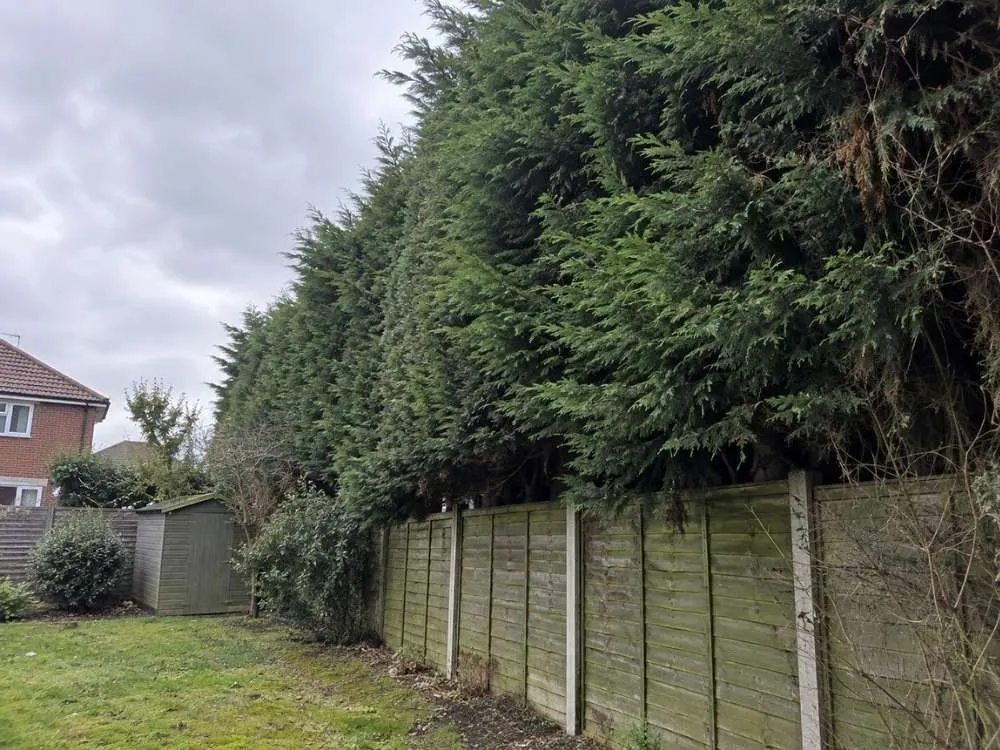
Conifer hedges grow quickly and quietly. Left for a few seasons they take the light from half the garden and start to overhang the neighbours.
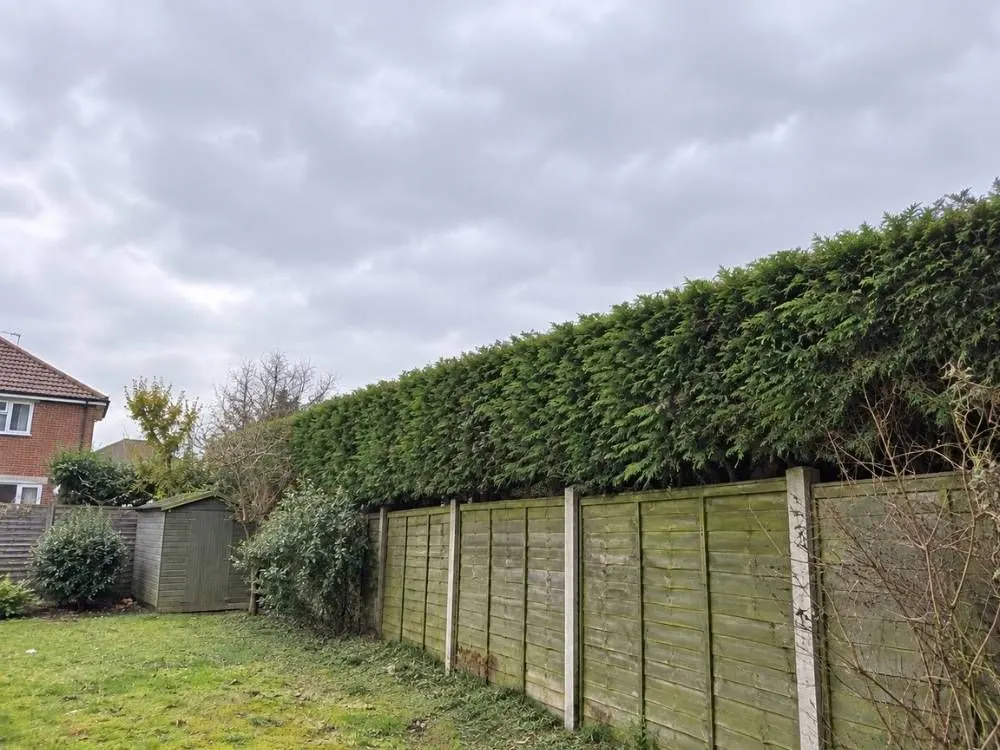
Reduced in height and trimmed back to a clean face, with the cuts kept in green growth so the hedge stays dense rather than brown.
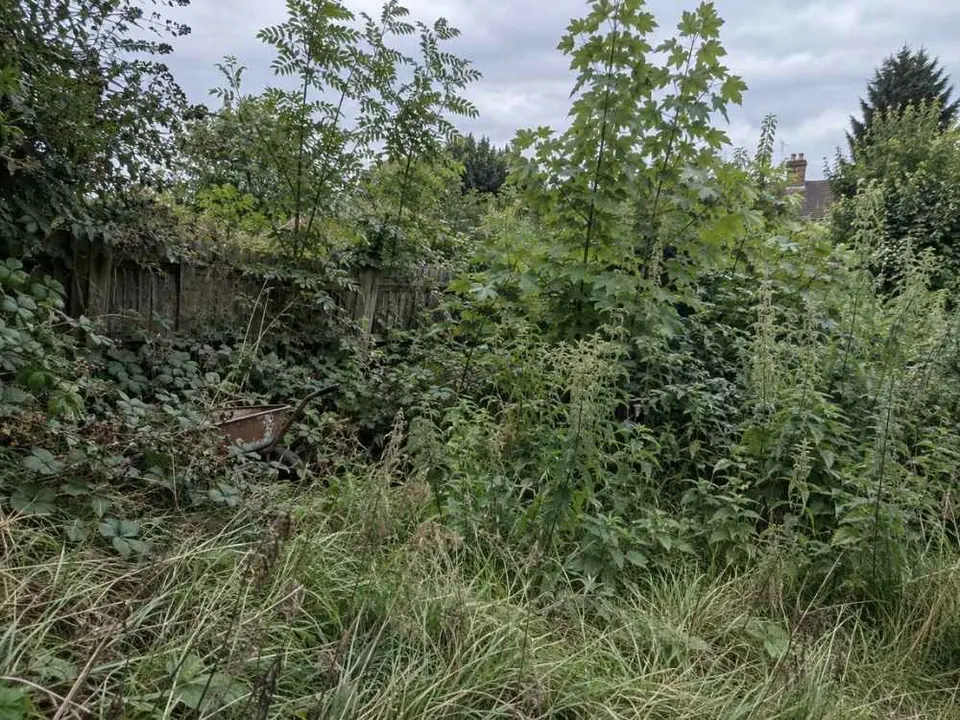
Brambles, nettles and self-seeded ash and sycamore take over quickly. Clearing them back gives you the space and the options again. Wood chipper and operator
Hedge cutting, conifer reduction and overgrown ground cleared, by NPTC-qualified, insured tree surgeons with their own chipper.
More disputes between neighbours come from hedges than from trees, and most of them are avoidable.
There is no law setting a maximum hedge height. There is, however, the high hedges procedure under the Anti-social Behaviour Act 2003. Where a line of two or more mostly evergreen plants stands over two metres and unreasonably affects a neighbour's enjoyment of their property, usually by blocking light, they can complain to Colchester City Council. The council charges a fee to consider a complaint and can order the hedge to be reduced.
Councils expect people to have tried to sort it out between themselves first. A reduction booked voluntarily is nearly always cheaper and less unpleasant than a formal notice.
You can generally cut branches and growth back to the boundary line on your side, but not beyond it, and not in a way that kills the hedge. The cuttings belong to the hedge's owner, so offer them back rather than throwing them over.
General information, not legal advice. For a formal dispute, speak to Colchester City Council or take legal advice.
Hedges are where most garden birds nest. Under the Wildlife and Countryside Act 1981 it is an offence to intentionally damage or destroy a nest while it is in use or being built, and hedge trimmers do not distinguish.
The main nesting season runs from roughly February to August. Hedge work can still go ahead in those months, but the hedge is checked for active nests first and the work moved or delayed if one is found. Outside that window, from late summer through winter, hedges can be cut without the same concern, which is why autumn is the busiest time for hedge work.
Regular cutting also helps the hedge. A hedge trimmed on a routine cycle stays dense and even, while one left for years often has to be reduced in stages, particularly if it is a species that struggles to regrow from old wood.
Conifer hedges are the most common hedge problem in Colchester gardens, and they come with one rule that decides everything.
Most conifers will not regrow from brown wood. Leylandii, cypress and thuja produce new growth only from green foliage. Cut the sides back past the green and the hedge is left with a permanent brown face that never fills in.
Height is different. Taking height off the top is usually fine, and a conifer hedge can be reduced considerably as long as the sides are kept in green growth. Once reduced, keeping it at that height is straightforward.
Yew is the exception. Unlike most conifers, yew will regrow from old wood and can be cut back hard and renovated over a few seasons.
When a hedge is too far gone, and the inside is bare and brown, removal and replanting often gives a better result than years of trying to nurse it back. Stumps can be ground out where a fence or new hedge is going in.
Scrub takes hold fast on ground that has been left: brambles, nettles, ivy and self-seeded ash, sycamore and willow that become small trees within a few years. Clearance work covers gardens that have got away, paddocks, plots being prepared for building, and boundaries that have closed in.
Two things are worth checking before clearing any sizeable area.
Wildlife. Alongside nesting birds, scrub and rough ground can hold protected species. Badger setts are protected, as are reptiles and amphibians on some sites. Where a site is being cleared for development, an ecological survey is often needed before work starts.
Invasive plants. Japanese knotweed is the one to know. Cutting or moving it can spread it, and disposing of it incorrectly is an offence, so it needs a specialist rather than a general clearance. If you think you have it, send photos before anything is cut.
Countryside hedgerows also have their own protection. Removing most field boundary hedgerows over thirty years old requires notice to the council under the Hedgerow Regulations 1997.
General information, not legal advice. For development sites, check ecology and planning requirements before clearance.
Length, height and depth. A long hedge at head height is quicker per metre than a shorter one needing platforms or ladders.
How long since the last cut. A hedge on an annual cycle is a fraction of the work of one left for five years.
Volume of waste. Conifer cuttings are bulky. Chipping on site keeps the cost down, and leaving the chips lowers it further.
Access. Whether the chipper can get near the hedge, or everything has to be carried through a house or side gate.
Send photos of the hedge or the area from a couple of angles for a provisional figure, followed by a free written quote.
Upload photos through our quote form any time, or call between 8am and 6pm, seven days a week.
Common questions about hedges and clearance work in Colchester.