Tree Health Inspections in Colchester
Dead branches appearing in the crown, fungus at the base, a lean that was not there last year: these are the things worth having looked at before they become an emergency. We check the tree, explain what we find in plain terms and set out the options, from leaving it alone to pruning or removal.
- NPTC-qualified and insured
- Free written quotes
- Plain-English findings
- 5-star Google rated
- Open 7 days, 8am to 6pm
What We Look For
Most failing trees give warning signs long before they come down. They are just easy to walk past.
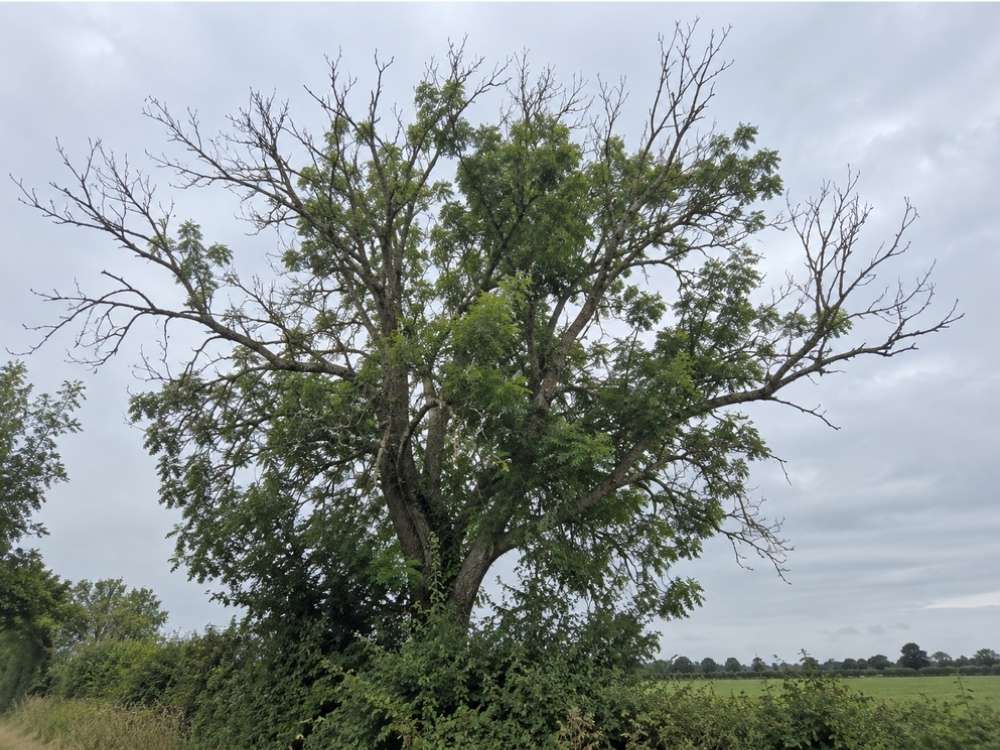
Bare branch tips, sparse leaf cover and dead wood spreading down from the top usually mean the tree is struggling, and in ash it often means dieback.
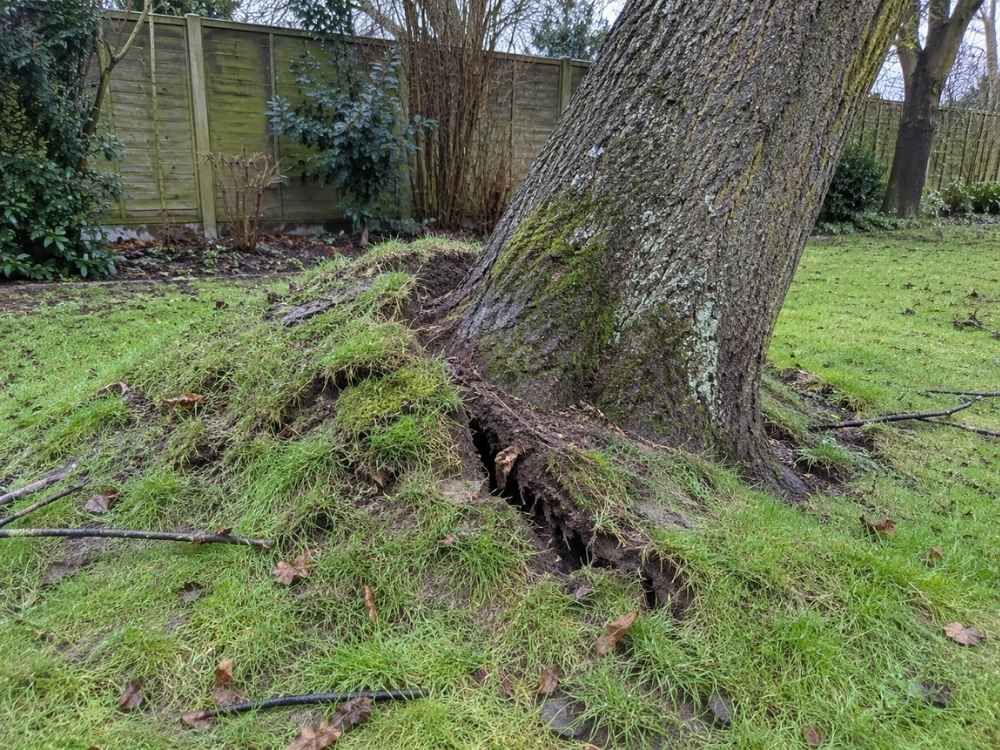
Cracked or heaving soil on one side of a trunk means the roots have moved. It is one of the clearest signs that a tree may be about to fail.
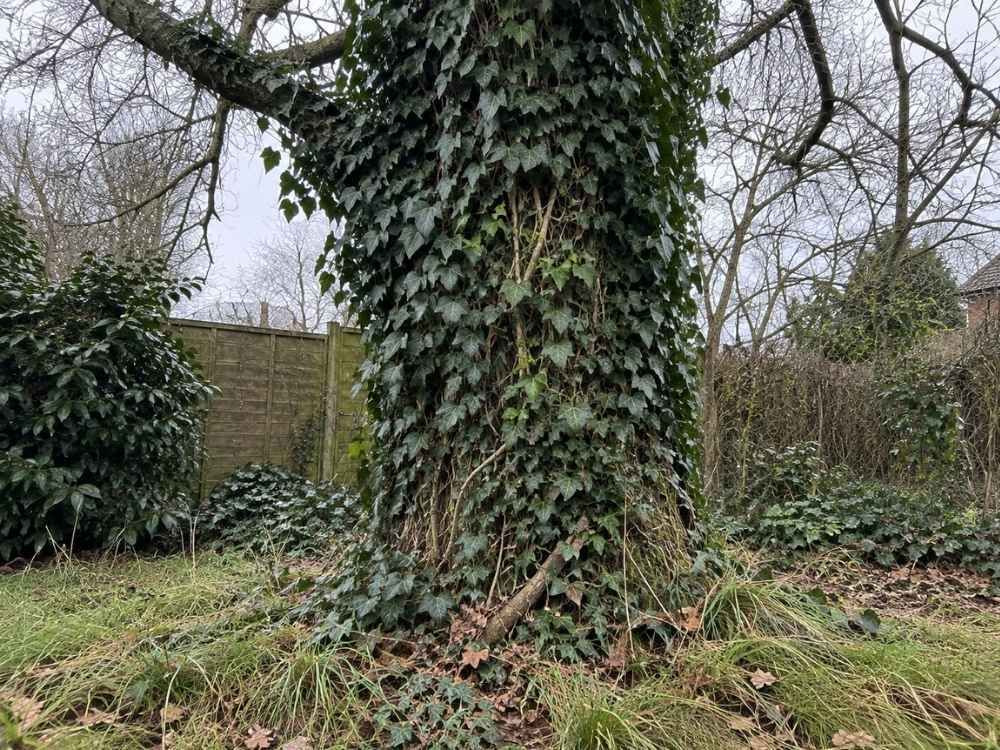
Ivy does not feed on the tree, but it conceals decay, cavities and cracks, and adds weight and wind resistance to a crown in winter.
Tree Inspections in Colchester
A practical look at a tree's condition by NPTC-qualified, insured tree surgeons, with a free written quote for any work that turns out to be needed.
Is This Tree Safe?
The most common reason people call: a tree that has started to look wrong, and a straight answer on whether it needs work.
After a Storm
Checking for split limbs, hanging branches and root movement once the wind has passed. For trees still posing a danger, see our emergency tree service.
Ash Dieback
Assessing ash trees for dieback and advising whether one can be monitored or needs removing while it is still safe to climb.
Decay and Fungal Growth
Brackets, cavities and soft or hollow-sounding wood examined to judge how much sound timber is left.
Trees Near Buildings
Overhanging limbs, contact with roofs and gutters, and trees close to walls, drives and drains looked at before damage occurs.
Landlords and Businesses
Checks on trees over car parks, paths, playgrounds and boundaries, where a duty of care applies to whoever controls the land.
Why Trees Get Inspected
Trees are one of the few things on a property that can be perfectly safe for eighty years and then not be. Most of the risk is concentrated in trees near houses, parked cars, footpaths, playgrounds and boundaries, which is exactly where garden trees tend to be.
Whoever owns or controls the land has a duty to take reasonable care that trees do not injure people or damage property. Reasonable is the important word. Nobody is expected to have every tree surveyed by a specialist every year. What is expected is a proportionate approach: a closer eye on trees where people gather, a look after big storms, and acting on problems once they are spotted.
The National Tree Safety Group, whose guidance is widely used in the UK, takes the same line: manage the risk sensibly rather than remove every tree that might one day fail. For landlords, schools, farms and businesses, keeping simple dated records and photographs of checks is worth the few minutes it takes.
General guidance rather than legal advice. Your insurer or local authority may have its own requirements for trees on your land.
What an Inspection Covers
An inspection is a careful look at the whole tree from ground level, working from the top down.
The crown. Dead wood, bare branch tips, thin or discoloured foliage, broken limbs left hanging, and dense weak regrowth from previous topping.
The trunk and main forks. Cracks, bulges, cavities, bleeding or oozing bark, and unions where two stems have grown together with bark trapped between them, which is a common failure point.
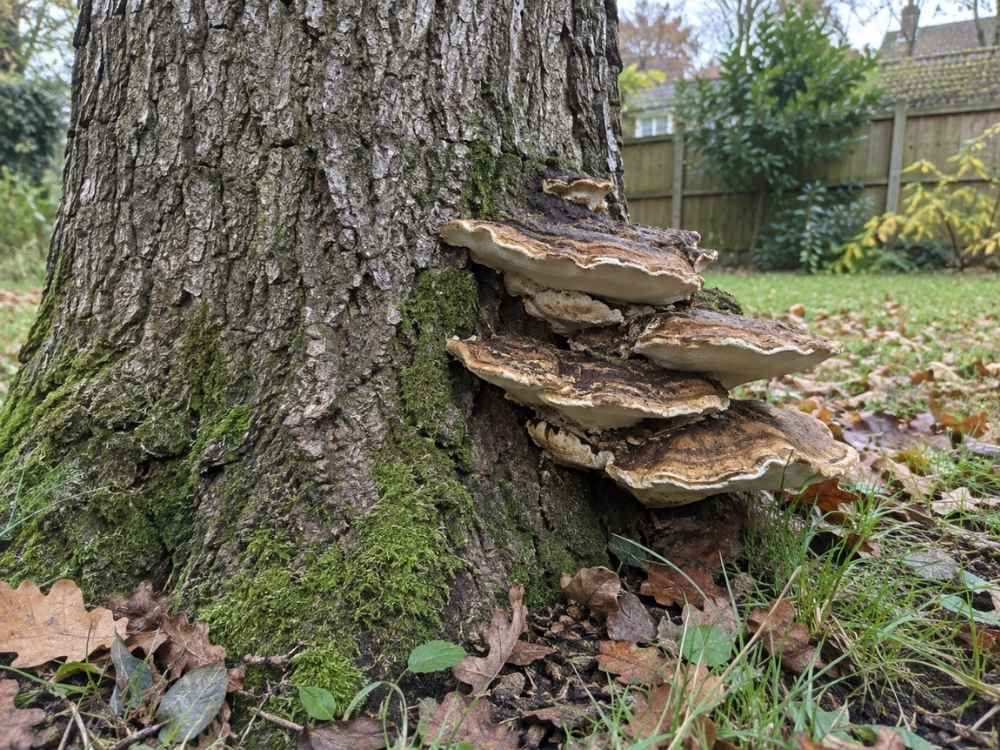
The base and roots. Fungal brackets, hollow-sounding or soft wood, damage from mowers or building work, severed roots from trenching, and lifting or cracked soil that suggests movement.
The surroundings. What the tree would hit if it or a limb failed, and how often people are underneath it.
Afterwards you get a plain explanation of what was found and the realistic options, which are usually to leave and monitor, deadwood or reduce the tree, or remove it. Where work is needed, it comes with a free written quote, and for protected trees we make the council application at no charge.
For a formal survey for planning, a mortgage or a subsidence claim, the right person is a consulting arboriculturist who produces reports, rather than a tree surgeon.
Problems Commonly Seen Around Essex
Ash Dieback
Ash dieback has spread across the country and kills the large majority of ash trees it infects. Look for sparse, patchy crowns, dead branch tips and dark lesions where side branches meet the stem. There is no cure. The practical issue is timing: infected ash becomes brittle and unpredictable to work on, so an affected tree near a house, road or footpath is better dealt with sooner rather than later. A small proportion of ash show tolerance and can be left and monitored.
Honey Fungus
Honey fungus attacks roots and the base of the trunk. Signs include clumps of honey-coloured toadstools in autumn, a white fungal sheet under the bark at ground level and black bootlace strands in the soil. Affected trees often decline over several seasons and can fail at the base.
Horse Chestnut Problems
Brown, shrivelled leaves in midsummer are usually leaf miner, which looks alarming but does not kill the tree. Bleeding canker, showing as dark, sticky patches weeping from the bark, is the more serious one and is worth having assessed.
Oak Processionary Moth
These caterpillars move in nose-to-tail processions and build white silken nests on oak trunks and branches. Their hairs cause rashes and breathing problems, so nobody should touch or disturb a nest. It has been found in parts of Essex. Report sightings to the Forestry Commission through TreeAlert and use a specialist contractor for removal.
Identification from photographs is never certain. Where a notifiable pest or disease is suspected, report it through the Forestry Commission's TreeAlert service.
Worried About a Tree?
Send photos of the whole tree, the base and anything that looks wrong, or call between 8am and 6pm, seven days a week.
Tree Health Questions
Common questions about tree condition and safety in Colchester.
What happens during a tree health inspection?
We look over the tree from ground level: the crown for dieback and dead wood, the trunk and forks for cracks, cavities and fungal growth, and the base for decay or root movement. You then get a plain explanation of what we found, the options, and a free written quote for any work.
How often should trees be checked?
There is no legal interval. In practice, trees near houses, parking, footpaths and play areas deserve a look at least yearly and after major storms, while trees in the middle of a field matter far less. Where people could be hurt, keeping a simple record of checks is a sensible precaution.
How can I tell if a tree is dying?
Common signs are bare branch tips, leaves that are smaller, sparser or arriving late, dead wood spreading through the crown, bark falling away, fungal brackets on the trunk or roots, and shoots appearing low on the stem. One sign alone may mean little; several together are worth having checked.
What is ash dieback and can an affected tree be saved?
Ash dieback is a fungal disease that has spread across Britain and kills most ash trees it infects. There is no treatment. A few trees show tolerance and can be monitored, but infected ash near buildings, roads or paths usually needs removing before the wood turns brittle and unsafe to climb.
Is fungus growing on my tree a problem?
It depends on the fungus and where it is. Many are harmless recyclers on dead wood, but brackets on the trunk, at a main fork or around the base can point to decay inside living wood, which weakens the tree. Photograph it, avoid knocking it off, and have the tree looked at.
Can ivy kill a tree?
Ivy is not a parasite and does not feed on the tree, so a healthy tree usually copes. The problems are practical: ivy hides cracks, cavities and decay from view, and dense evergreen cover catches wind in winter storms. On suspect trees it is cleared so the trunk can be seen.
Do you provide written reports for mortgages or insurance?
For a mortgage, subsidence claim, planning application or a formal tree survey to BS 5837, you need a consulting arboriculturist who specialises in reports rather than a tree surgeon. What we give you is a practical assessment of the tree's condition and a free written quote for any work needed.
As a landlord or business, what are my responsibilities for trees?
Whoever controls the land has a duty to take reasonable care that trees do not injure people or damage property. In practice that means proportionate checks, acting on what you find and keeping simple records. This is general guidance rather than legal advice, and your insurer may have its own requirements.