Emergency Tree Service in Colchester
A tree down across the drive, a split limb hanging over the house or a trunk leaning after a storm needs dealing with quickly and safely. Emergency call-outs are available between 8am and 6pm, seven days a week. Call to check how soon someone can attend, and keep yourself and others well clear of the tree until then.
- Emergency call-outs 8am to 6pm, 7 days
- Call to check availability
- NPTC-qualified and insured
- Free written quotes
- 5-star Google rated
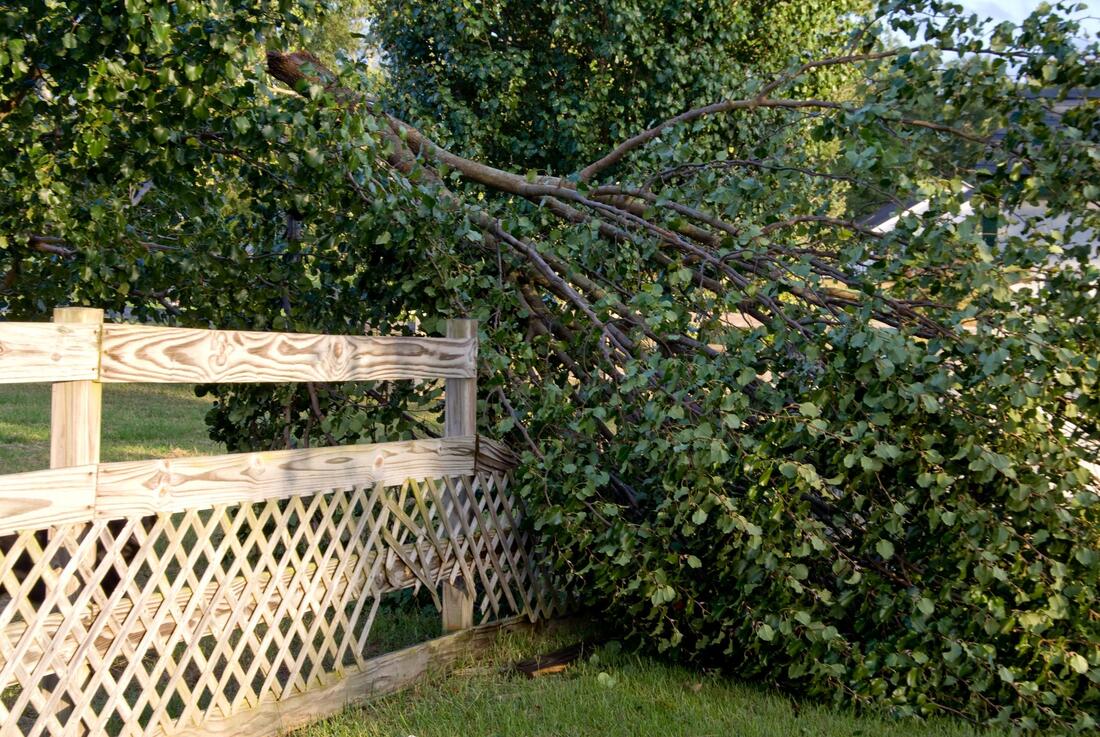
Make It Safe, Then Clear It
Emergency tree work is done in order of risk: anything threatening people first, then damage to buildings, then getting access back. Full clearance can follow once the danger has gone.
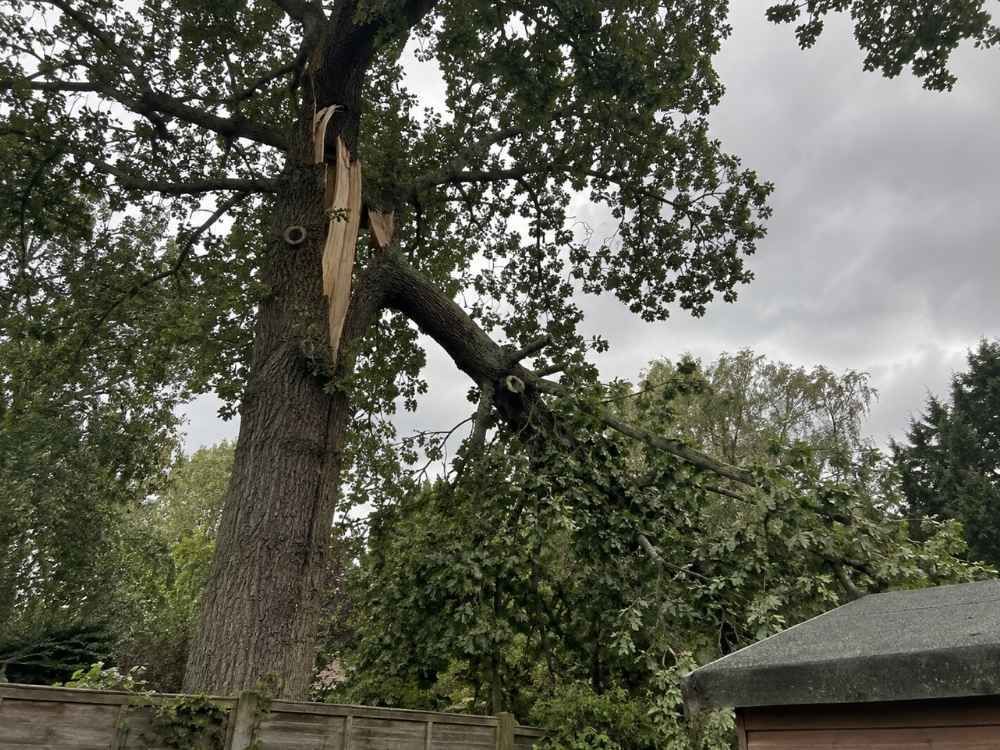
A limb torn from the trunk and caught in the crown can drop without warning. It is secured and lowered in sections rather than pulled down onto the garden or buildings below.
Branches blocking drives, paths and gardens are cut and chipped on site, so cars can get out and the area is safe to use again. Wood chipper and operator
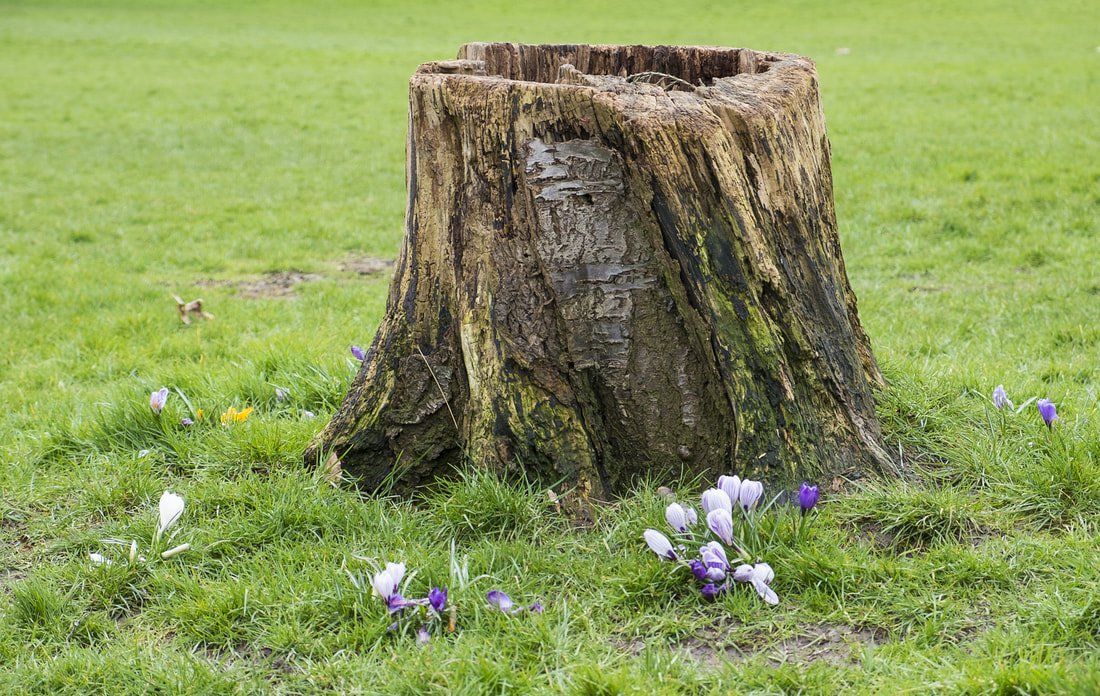
Once a fallen tree is made safe, the remaining trunk, root plate and stump can be removed on a follow-up visit. Tree removal Colchester
Emergency Tree Work in Colchester
Emergency call-outs between 8am and 6pm, seven days a week, carried out by NPTC-qualified, insured tree surgeons. Call to check availability.
Fallen Trees
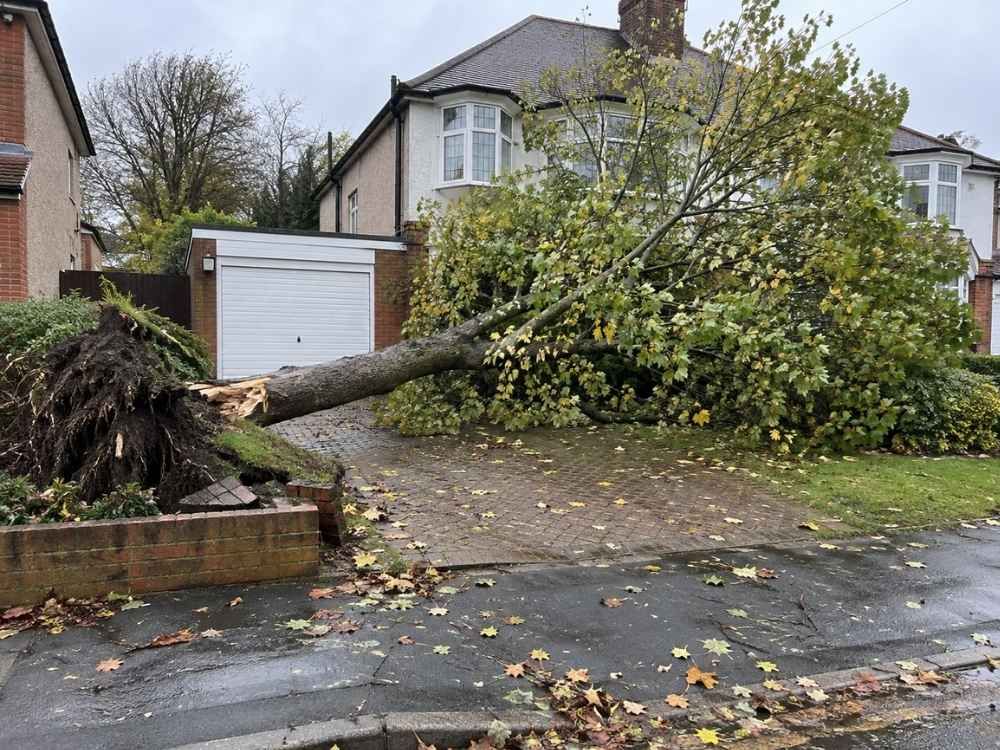
Whole trees brought down by wind, waterlogged ground or root failure, cut up and cleared from gardens, drives and property.
Trees on Buildings
Trees and large limbs resting on roofs, conservatories, garages and fences, lifted off in controlled sections to avoid further damage.
Hanging and Split Branches
Broken limbs caught in the crown or split from the trunk, taken down before they fall onto people, cars or buildings.
Leaning and Unstable Trees
Trees that have started to lean or show lifting soil at the base after a storm, assessed and made safe or taken down.
Blocked Driveways and Access
Trees and branches blocking drives, private roads and paths cleared so vehicles and people can get in and out safely.
Follow-Up Clearance
Remaining trunks, root plates and stumps removed once the immediate danger is dealt with. Tree removal in Colchester
What to Do Straight Away
A fallen or damaged tree can still move. Branches under tension can spring back, root plates can settle and hanging limbs can drop without warning. Until the tree has been made safe:
Keep everyone clear. Move people, pets and cars away from the tree and anything it could still hit, including the area beneath hanging branches.
Check for power lines. If the tree is touching or has brought down overhead lines, stay at least 10 metres away, assume the lines are live and call 105. Call 999 if there is immediate danger to life.
Check for gas and electrics. If a tree has damaged a building and you smell gas, leave the property and call the National Gas Emergency Service on 0800 111 999.
Do not start cutting. Fallen trees are full of stored tension. A branch or trunk cut in the wrong place can split or spring violently, which is how many chainsaw injuries happen. Leave it to someone trained to read how the wood will move.
Take photos. Photograph the tree, the damage and where it came from before anything is moved. Your insurer will almost always ask for them.
Insurance, Neighbours and Responsibility
Your Own Insurance Comes First
If a tree has damaged your house, garage or other insured buildings, the usual first step is a claim on your own buildings insurance, even if the tree belonged to a neighbour. Many policies also cover the cost of removing the fallen tree where it has caused insured damage, though rarely where it has simply fallen across a lawn. Tell your insurer early, keep photos and ask whether they need to approve the work first. Making a tree safe to stop further damage is normally expected rather than something to delay.
When a Neighbour's Tree Falls
A tree owner is generally only liable for damage if they knew, or reasonably should have known, the tree was dangerous and did nothing. If that applies, your insurer may recover its costs from the neighbour or their insurer. A calm conversation and shared photos help, and it is worth keeping any earlier messages about the tree's condition.
Council and Road Trees
Trees on council land should be reported to the council that owns them. Trees blocking public roads can be reported to Essex Highways, or to 999 where they create immediate danger to traffic.
General information, not legal or insurance advice. Always check your own policy wording and speak to your insurer.
Protected Trees in an Emergency
Work that is urgently necessary to remove an immediate risk of serious harm is an exception to needing Tree Preservation Order consent or conservation area notice. The exception is narrow: it covers making the tree safe, not removing a whole tree that could have been made safe by taking off one broken limb.
Before work starts, take clear photos showing why the tree was dangerous. Let Colchester City Council know as soon as practical. Where a protected tree needs further work once the emergency is over, we can make the council application for you, free of charge.
General information, not legal advice. If there is time, speak to the council's tree officer before work on a protected tree.
Signs a Tree Needs Urgent Attention
Not every storm-damaged tree is an emergency, but some problems should not be left.
Lifting or cracked soil at the base. Ground heaving on one side of a tree after strong wind can mean the root plate has moved and the tree may fall.
A new or worsening lean. A tree that has always leaned is often stable. One that has started leaning after a storm is not.
Splits in the trunk or main branches. Cracks where large limbs join the trunk, or down the stem itself, can open further in the next wind.
Hanging branches. Broken limbs caught in the crown, sometimes called hangers, can drop at any time, often on a calm day after the storm has passed.
Fungal growth after damage. Brackets or mushrooms around the base or on the trunk can point to decay that weakens the tree. For a considered look at a tree's condition, see our tree health inspections.
If you are unsure, keep people clear and send photos. We can advise whether it needs attention today or can wait for a planned visit, with a free written quote for the work.
Tree Down or Damaged?
Emergency call-outs between 8am and 6pm, seven days a week. Call to check availability, or send photos any time.
Emergency Tree Questions
Common questions when a tree has fallen or been damaged.
What should I do if a tree falls on my house?
Get everyone out of the affected rooms and keep clear of the tree, which may still move. If anyone is hurt, or gas or electrics are damaged, call 999. Take photos for your insurer, then call us to check availability for making the tree safe and lifting it off the building.
A tree has fallen on power lines. What should I do?
Stay at least 10 metres away from the tree and the lines, keep others back and assume the lines are live. Call 105 to report it to the electricity network operator, or 999 if there is immediate danger to life. Nobody should cut the tree until the network has made the lines safe.
Who is responsible if my neighbour's tree falls on my property?
Damage to your property is normally claimed on your own buildings insurance first, whoever owns the tree. Your insurer may then pursue the neighbour if the tree was known to be dangerous and ignored. Take photos before clearance and keep invoices. This is general information, not legal advice.
Will my insurance cover emergency tree removal?
Many buildings policies cover removing a fallen tree that has damaged the house or a garage, and sometimes outbuildings or fences, but rarely a tree that falls without causing damage. Check your policy wording, tell your insurer early and keep photos and invoices, as they may ask for both before paying.
Can I remove a protected tree that has become dangerous?
Work to remove an immediate danger is an exception to the need for Tree Preservation Order consent, but only the dangerous part should be dealt with. Take clear photos first and notify Colchester City Council as soon as possible. Anything beyond making the tree safe normally still needs consent.
Do you offer emergency call-outs at night?
Emergency call-outs are available between 8am and 6pm, seven days a week, so call to check availability. Outside those hours, keep everyone clear of the tree, call 105 if power lines are involved or 999 if there is danger to life or a road is blocked, and call us from 8am.
A fallen tree is blocking the road. Who should I call?
If it creates immediate danger to traffic, call 999. If it is blocking a public road without immediate danger, report it to Essex Highways, which is responsible for most local roads. Trees fallen from private land onto the road remain the landowner's responsibility, so the owner may be asked to arrange clearance.
How can I tell if a storm-damaged tree is unsafe?
Warning signs include cracked or lifting soil around the base, a new lean, splits in the trunk or main branches, and broken branches caught in the crown. Hanging branches can fall without warning, so keep people and cars clear. Send photos and we can advise whether the tree needs urgent attention.