
Tree Pollarding in Colchester
Pollarding keeps suitable trees at a manageable size for decades by cutting them back to the same points on a regular cycle. Whether you have established pollards that are due a re-cut, a young tree you want to start as a pollard, or an old pollard that has been left too long, send a photo for a quick provisional quote.
- NPTC-qualified and insured
- Free written quotes
- TPO and conservation applications handled free
- 5-star Google rated
- Open 7 days, 8am to 6pm
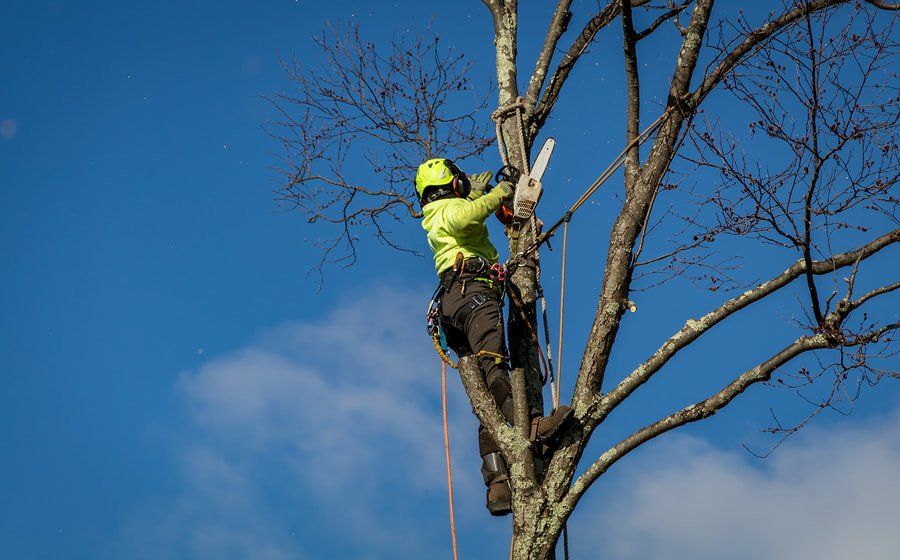
A Cycle, Not a One-Off Cut
A pollard is managed over many years. The same cutting points are revisited each time, and the tree grows a new crown of straight shoots in between.
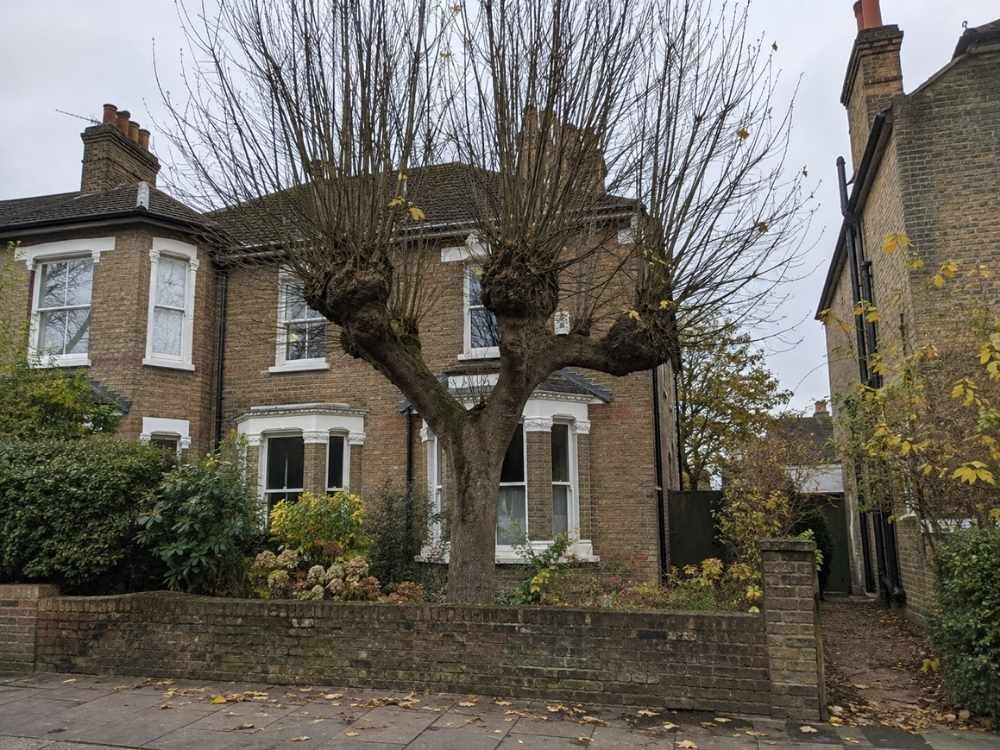
After a few seasons the pollard heads carry a full crown of long, straight shoots, and the tree is ready to be cut back again.
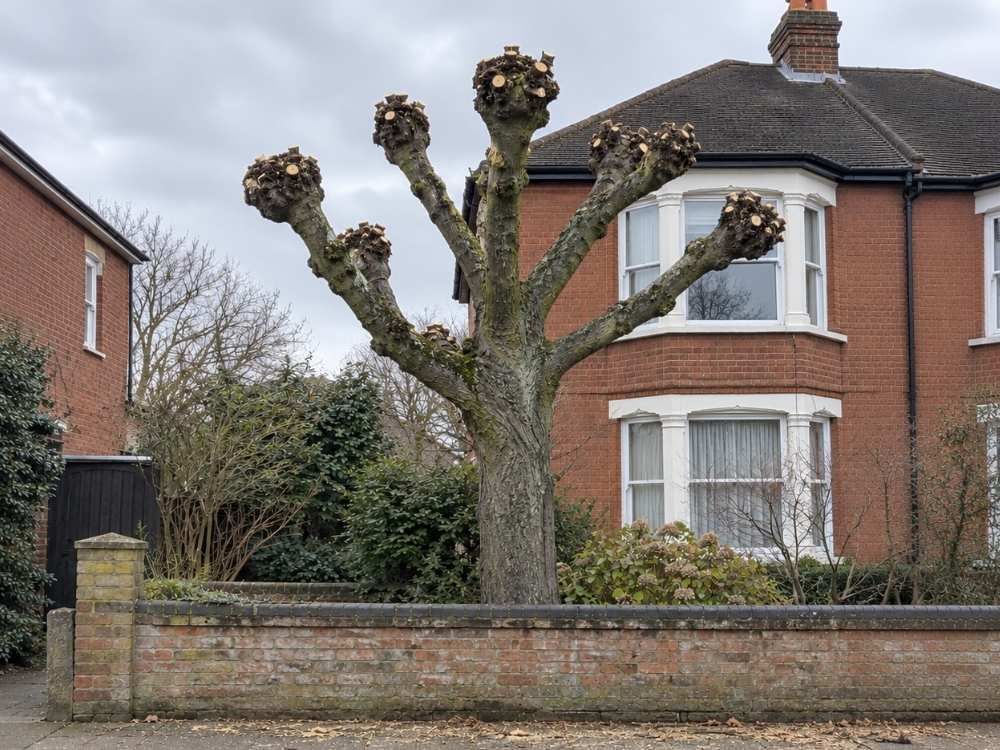
Regrowth is removed just above the swollen pollard heads, leaving the framework intact so the tree can regrow from the same points.
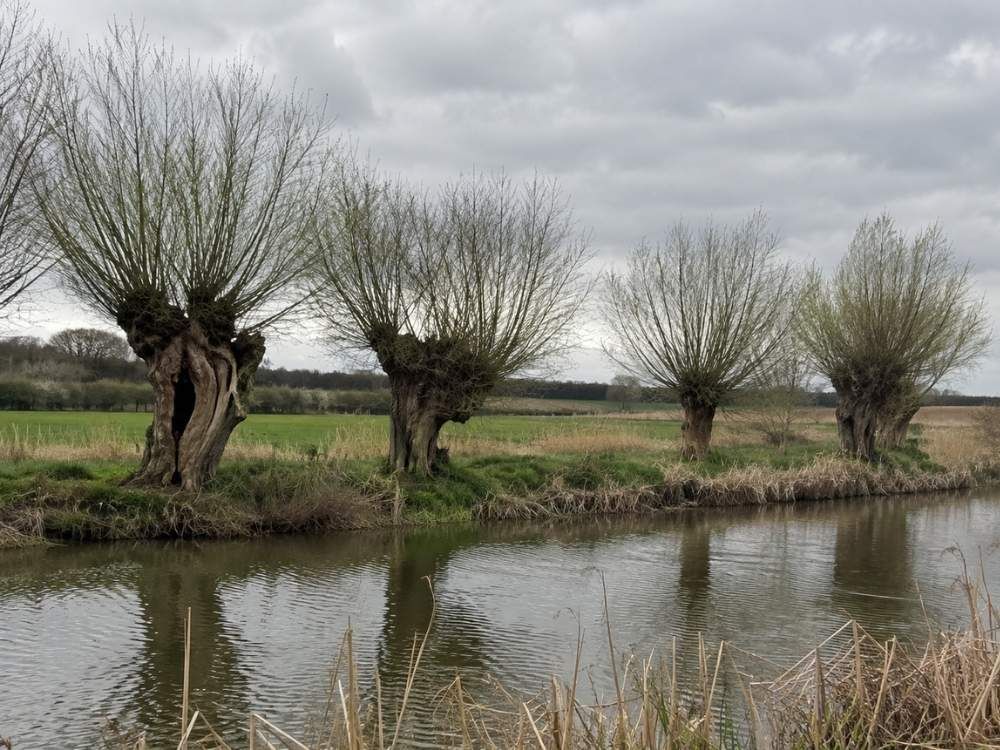
Willows are among the most traditional pollards, and cutting them regularly stops heavy crowns splitting old trunks apart. Tree pruning Colchester
Pollarding Services in Colchester
From garden limes and willows to lines of old riverside pollards on larger properties.
Re-Pollarding Existing Trees
Regular re-cutting of established pollards back to the pollard heads, keeping the framework healthy and the crown at a manageable size.
Starting a New Pollard
Forming a pollard on a suitable young tree by setting the framework height and cutting points it will be managed from for years to come.
Restoring Lapsed Pollards
Bringing back old pollards that have been left for many years, usually in stages over several visits to reduce the stress on the tree.
Willow and Riverside Pollards
Re-cutting pollard willows beside ponds, ditches and rivers before heavy crowns split the trunks, with the brash chipped on site.
What Pollarding Is and Why It Works
Pollarding is one of the oldest ways of managing trees in England. A tree is cut back to a framework of short branches at a set height, then the new shoots that grow from those points are removed again on a regular cycle. Over the years the cutting points swell into rounded pollard heads, sometimes called knuckles, which the tree regrows from after every cut.
Historically it was done to harvest poles, firewood and animal fodder above the reach of grazing livestock. Essex has some of the country's best-known examples: the ancient beech, hornbeam and oak pollards of Epping Forest were cut this way for centuries, and many are still standing.
Today, pollarding is mainly used to keep trees a manageable size in gardens, streets and small spaces, where a naturally large tree would otherwise outgrow its position. Kept on a consistent cycle, a pollard can live far longer than an unmanaged tree of the same species, because it never carries the weight of a full mature crown.
If you are weighing up whether a tree should be pollarded or pruned conventionally, our guide to pollarding versus pruning explains the differences in more detail.
Which Trees Suit Pollarding
Pollarding only works on species that respond to hard cutting by sending out plenty of new shoots.
Good candidates: willow, poplar, lime, London plane and hornbeam all regrow vigorously and are traditional pollards. Lime and plane are the classic pollarded street trees, while willow is the familiar pollard of riverbanks and field ditches.
Poor candidates: birch and cherry tend to respond badly to heavy cuts, and most conifers, including leylandii, will not regrow from bare wood at all. For these, a crown reduction or, where a tree has simply outgrown its space, removal and replanting with a smaller species is usually the better option.
Start Young
New pollards are best started on young trees, while the branches being cut are still small. Small wounds seal quickly and the tree adapts to the pattern from early on. Turning a large, mature tree that has never been pollarded into one means cutting through thick, old wood, which frequently leads to decay, dieback or the loss of the tree. In those cases, a crown reduction is normally the safer route.
Keeping to the Cycle
The key to healthy pollards is consistency. Garden limes and willows are commonly re-cut every one to three years, and some slower species on longer cycles. Each cut removes the regrowth just above the pollard heads, without cutting into the heads themselves.
Shorter cycles keep the wounds small and the branches light. They also tend to make each visit quicker and cheaper, because there is less material to take down and chip.
Lapsed Pollards
When a pollard is left for many years, the shoots grow into heavy limbs sitting on old heads that were never meant to support them. Willows are especially prone to splitting apart once this happens. Bringing a lapsed pollard back into a cycle is usually done gradually over several visits, removing a proportion of the branches each time. Very old or fragile pollards sometimes need a lighter reduction first rather than a full re-cut.
Timing
Pollarding is done in the dormant season, from late autumn to late winter, before the buds break. It avoids the spring period when trees are drawing on stored energy to leaf out, and falls outside the main bird nesting season.
Pollarding and Protected Trees
A Tree Preservation Order covers pollarding just as it covers pruning and felling, so work on a protected tree needs written consent from Colchester City Council. Trees in a conservation area normally need six weeks' notice before any work. Established pollards with a history of regular cutting are often approved for continued management, but consent is still needed.
We can make the application or notification for you, free of charge, and include it in the quote. Work is carried out by NPTC-qualified, insured tree surgeons.
General information, not legal advice. If you are unsure whether a tree is protected, check with Colchester City Council before any work is carried out.
What Affects the Cost of Pollarding
Time since the last cut. A pollard on a regular one to three year cycle is a much smaller job than one that has been left for a decade.
Height and number of heads. Tall pollards and those with many heads need more climbing time.
Number of trees. A row of willows or an avenue of limes cut on the same visit is more cost-effective per tree than separate call-outs.
Access and waste. Pollarding produces a lot of brash, so how easily it can be chipped and taken away makes a difference, as does access for the chipper.
Send photos of the trees and the route in for a provisional figure, followed by a free written quote.
Pollards Due a Cut?
Upload a photo through our quote form any time, or call between 8am and 6pm, seven days a week.
Pollarding Questions
Common questions about pollarding trees in Colchester.
What is pollarding?
Pollarding is a way of managing a tree by cutting its branches back to a framework at a set height, then removing the regrowth back to the same points on a regular cycle. Over time, swollen knuckles called pollard heads form at those points, and new shoots grow from them after each cut.
Which trees can be pollarded?
Species that regrow strongly after cutting suit pollarding best, including willow, poplar, lime, London plane and hornbeam. Many others tolerate it less well. Birch and cherry rarely respond well, and most conifers will not regrow from bare wood at all. A photo of the tree is the easiest way to check suitability.
How often does a tree need re-pollarding?
It depends on the species and how much regrowth you are happy to live with. Lime and willow in gardens are commonly re-cut every one to three years. Shorter cycles mean smaller cuts that the tree seals more easily, and each visit is usually quicker and cheaper than catching up on years of growth.
Can a mature tree be pollarded?
Converting a large, mature tree that has never been pollarded is not usually recommended. It means making big cuts through old wood, which the tree struggles to seal, often leading to decay and dieback. A crown reduction is normally a safer way to make a mature tree smaller. Pollards are best started young.
When is the best time of year to pollard a tree?
Pollarding is best done in the dormant season, from late autumn through to late winter, before the buds break. The tree has stored energy for regrowth, the structure is easy to see and nesting birds are not an issue. Avoid cutting as leaves are emerging in spring, when trees are at their most vulnerable.
Is pollarding the same as topping?
No. Topping cuts large branches back to stubs on a tree of any age, usually as a one-off, and tends to cause decay and weak regrowth. Pollarding starts on a young tree, uses consistent cutting points and follows a regular cycle, so the tree adapts to it and can stay healthy for centuries.
Do I need permission to pollard a tree in Colchester?
Only if the tree is protected. A Tree Preservation Order covers pollarding, so consent from Colchester City Council is needed, and conservation area trees normally need six weeks' notice. We can make the application or notification to the council for you, free of charge, as part of the quote.
What happens if a pollard is left too long?
The regrowth thickens into heavy branches on old pollard heads that were never meant to carry that weight, which can make them split away or tear the trunk. Restoring a lapsed pollard is usually done gradually over several visits, cutting back a portion of the branches each time rather than all at once.