Tree Pruning and Crown Reduction in Colchester
A tree that has grown too big, too dense or too low does not always need to come down. Careful pruning can bring back light, clear a drive or roof and remove dead wood while keeping the tree healthy and natural in shape. Send a photo for a quick provisional quote on reduction, lifting, thinning or deadwooding.
- NPTC-qualified and insured
- Free written quotes
- TPO and conservation applications handled free
- 5-star Google rated
- Open 7 days, 8am to 6pm
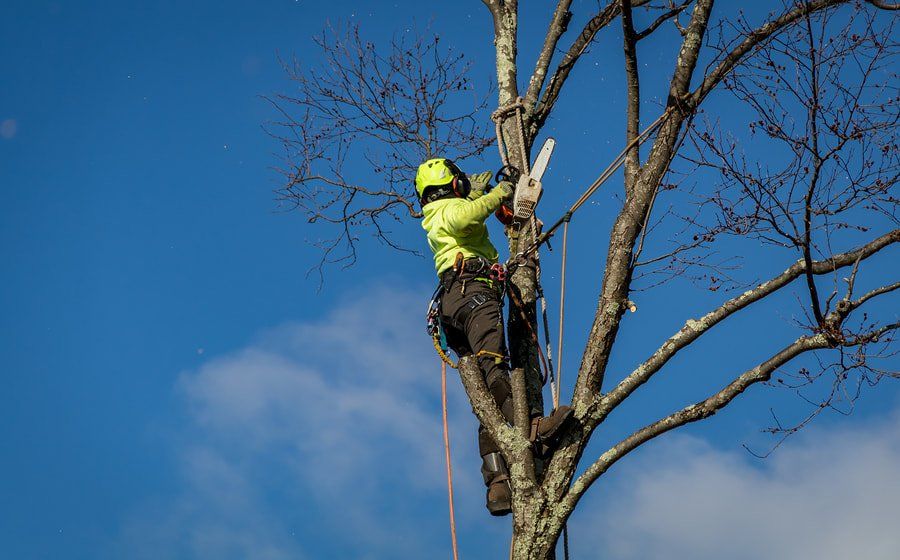
Pruning That Keeps Trees Healthy
Good pruning is judged by what the tree looks like a year later, not the day the work is finished. These are the situations most garden pruning deals with.
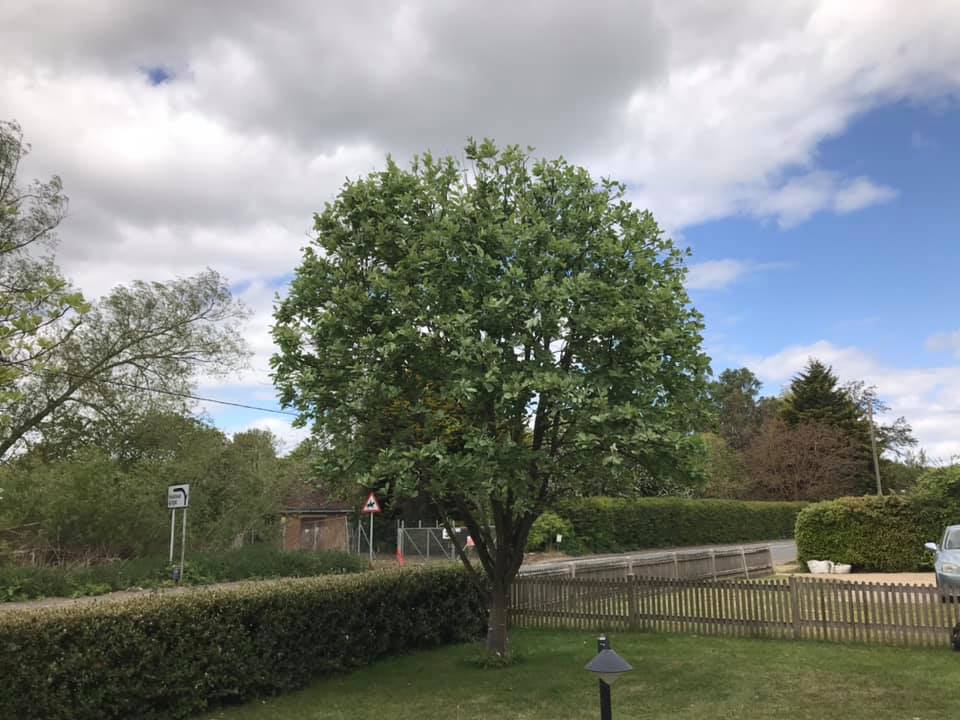
A crown reduction cuts branches back to healthy growth points around the whole canopy, so the tree ends up smaller but keeps a rounded, natural outline.
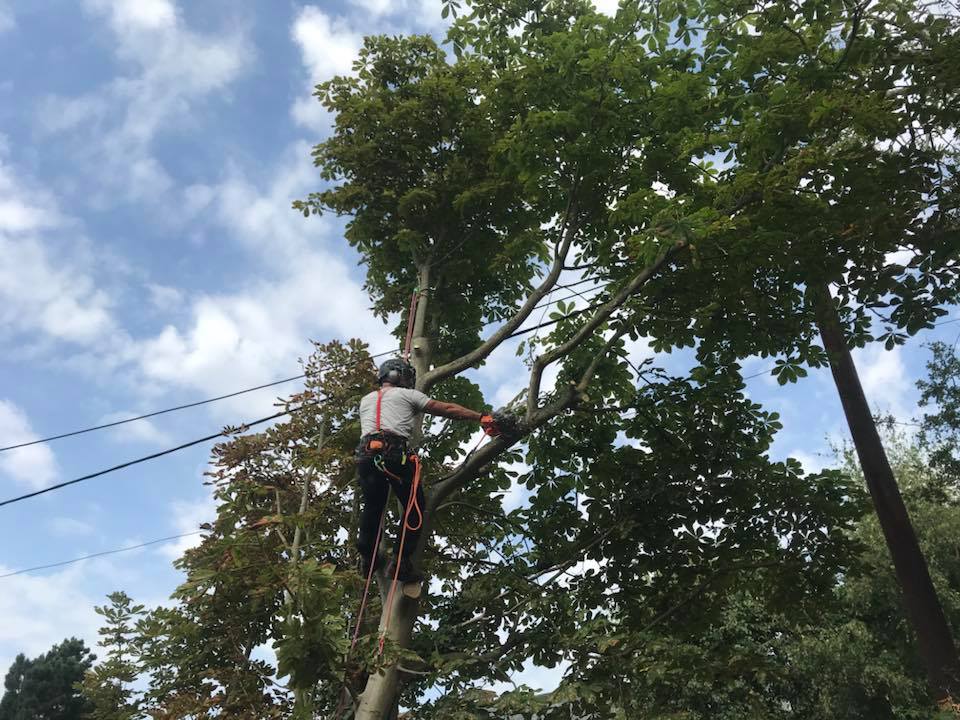
Branches rubbing on roofs, gutters, telephone wires or a neighbour's property can be cut back selectively. Trees near overhead power lines are a separate matter for the electricity network operator.
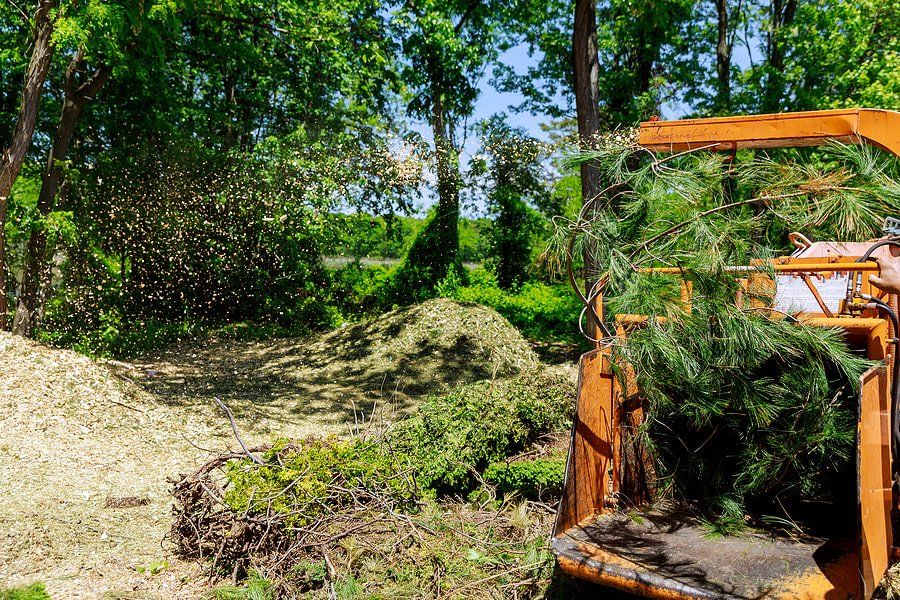
Pruned branches are chipped on site, leaving lawns and borders clear once the work is complete. Wood chipper and operator
Tree Pruning Services in Colchester
The right cut depends on what the problem is: too much height, too much shade, branches in the way or wood that has died back.
Crown Reduction
Reduces the height and spread of the whole canopy by cutting back to healthy growth points, keeping a natural shape.
Crown Lifting
Removes the lowest branches to clear lawns, driveways, paths and pavements, and to let more light reach the ground.
Crown Thinning
Takes out selected inner branches so light and wind pass through, without changing the tree's outline or size.
Deadwooding
Clears dead, dying and broken branches that could fall, often combined with a reduction or lift on the same visit.
Formative Pruning
Light pruning of young trees to build a strong structure early, which avoids heavy corrective cuts in later years.
Pollarding
Cutting suitable trees back hard to the same points on a regular cycle, including maintaining existing pollards. Pollarding in Colchester
What Good Pruning Looks Like
The recognised benchmark for tree work in the UK is British Standard BS 3998: Tree Work - Recommendations. It is worth knowing a few of its principles, because they are the difference between a tree that recovers well and one that is damaged for years.
Cuts to the Right Place
Branches should be removed just outside the branch collar, the slightly swollen ring where a branch joins its parent stem, or reduced back to a side branch large enough to take over. Cutting flush against the trunk, or leaving long stubs, both make it harder for the tree to seal the wound and invite decay.
Not Too Much at Once
As a general guide, a crown reduction should remove no more than around a third of the leaf-bearing canopy of a healthy tree, and often less on mature or stressed trees. Leaves are how a tree feeds itself, so taking away too many at once weakens it and usually triggers a mass of fast, weakly attached shoots.
Why Topping Causes Problems
Topping, sometimes called lopping, cuts large branches back to bare stubs to make a tree smaller quickly. The regrowth that follows is dense and poorly anchored, the large wounds are prone to rot, and within a few years the tree is often more of a hazard than before. If a tree genuinely needs to be kept small permanently, pollarding started on a suitable young tree, or removal and replanting with a smaller species, are usually better options.
When comparing quotes, it is reasonable to ask how much will be taken off, where the cuts will be made and whether the work follows BS 3998. Our tree surgeons are NPTC-qualified and insured, and every job is confirmed with a free written quote.
Timing Pruning Around the Tree
Most deciduous trees can be pruned in late autumn and winter, when the leaves have dropped, the structure is easy to see and there is no nesting season to work around. Some species need different timing.
Cherries, plums and ornamental Prunus are best pruned in summer. Winter cuts leave them more open to silver leaf, a fungal disease that enters through fresh wounds.
Birch, maple and walnut bleed sap heavily if cut in late winter or spring as the sap rises. Pruning them from late summer to early winter avoids this.
Dead, split or dangerous branches should be dealt with whenever they are found, whatever the season.
Between roughly February and August, trees and hedges are checked for active nests before any cutting, because nesting birds are protected under the Wildlife and Countryside Act 1981.
Permissions and Neighbours
A Tree Preservation Order covers pruning as well as felling. Even a modest crown lift on a protected tree normally needs written consent from Colchester City Council, and trees in a conservation area generally need six weeks' notice before work. We can handle the application or notice for you, free of charge, as part of the quote.
For unprotected trees, you can usually cut back branches overhanging your property to the boundary line without your neighbour's permission. You cannot go beyond the boundary or damage the tree's health, and the cut branches legally belong to the tree's owner, so offer them back. A friendly conversation first avoids most disputes.
Trees Near Power Lines
Overhead power lines across Essex are managed by UK Power Networks. Branches growing towards or into lines should be reported to them rather than cut by a householder or general contractor. If a branch has brought down a line or is touching it, stay well clear and call 105.
General information, not legal advice. Check with Colchester City Council before pruning any tree that may be protected.
What Affects the Cost of Tree Pruning
The type and amount of work. A light crown lift on one tree is a short job. A full reduction on a large tree takes a climber most of a day.
Size and access. Tall trees need climbing and rigging, and gardens with no side access mean branches have to be carried through or lowered over boundaries.
What is underneath. Conservatories, greenhouses, garden buildings and cables mean branches are roped down rather than dropped.
Number of trees. Having several trees pruned on the same visit is usually more cost-effective than separate call-outs.
Waste. Chipping and removing everything costs more than leaving chips for your borders or logs for a wood burner.
Photos of the whole tree, anything close to it and the route in are usually enough for a provisional figure.
Tree Too Big or Too Close?
Upload a photo through our quote form any time, or call between 8am and 6pm, seven days a week.
Tree Pruning Questions
Common questions before booking tree pruning in Colchester.
What is the difference between crown reduction, crown thinning and crown lifting?
Crown reduction makes the whole canopy smaller by cutting branches back to healthy growth points. Crown thinning removes selected inner branches to let light and wind through without changing the outline. Crown lifting removes the lowest branches to raise the canopy above a lawn, drive, path or road.
How much of a tree can safely be cut back?
As a general guide, a crown reduction on a healthy tree should not remove more than around a third of its leaf-bearing canopy in one go, and often less on older or weaker trees. Removing too much at once stresses the tree and tends to trigger dense, weakly attached regrowth.
Is topping a tree bad for it?
Yes, in most cases. Topping or lopping cuts branches back to stubs rather than to healthy growth points. It leaves large wounds that are prone to decay and produces clusters of fast, weakly attached shoots that become a hazard later. Pollarding is different, because it starts on young trees and follows a regular cycle.
When is the best time to prune trees?
Most deciduous trees can be pruned in late autumn and winter. Cherries and plums are usually pruned in summer to reduce silver leaf risk, while birch, maple and walnut bleed sap if cut in late winter or spring, so late summer to early winter suits them. Dead or dangerous branches can come off any time.
Do I need permission to prune a tree in Colchester?
Only if the tree is protected. A Tree Preservation Order covers pruning as well as felling, so even crown lifting needs consent from Colchester City Council, and conservation area trees normally need six weeks' notice. We can make the application or notification to the council for you, free of charge.
How often should trees be pruned?
There is no fixed rule. Many established garden trees only need attention every three to five years, while fast-growing species such as willow, poplar and leylandii may need it more often. Young trees benefit from light formative pruning in their early years, which reduces the need for heavy cuts later on.
Can branches near overhead power lines be cut back?
Never attempt this yourself, and work close to live lines needs the network operator involved. In Essex, overhead power lines are managed by UK Power Networks, who can advise on clearing trees from their lines. If branches are touching or have brought down a line, stay well clear and call 105.
What is deadwooding and why does it matter?
Deadwooding removes dead, dying and broken branches from the crown. Dead wood becomes brittle and can fall without warning, particularly over drives, paths and play areas. Removing it also takes away an entry point for decay. It is often combined with a crown reduction or crown lift on the same visit.